After the Fire, Studying Changes in the Cultural Landscape
24 November 2026
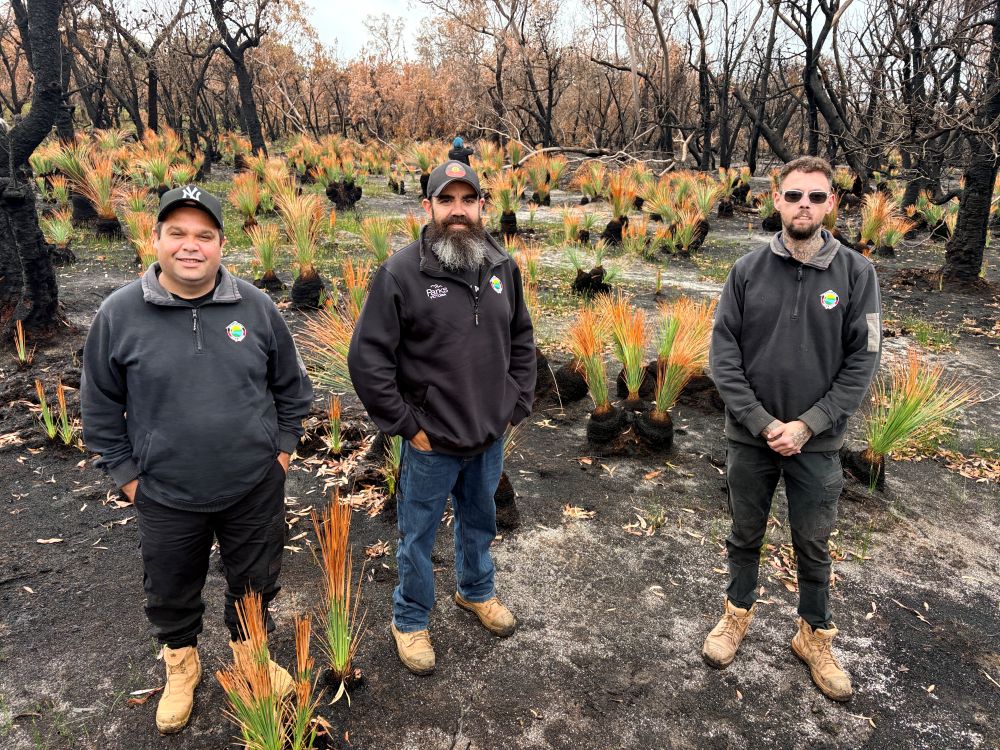
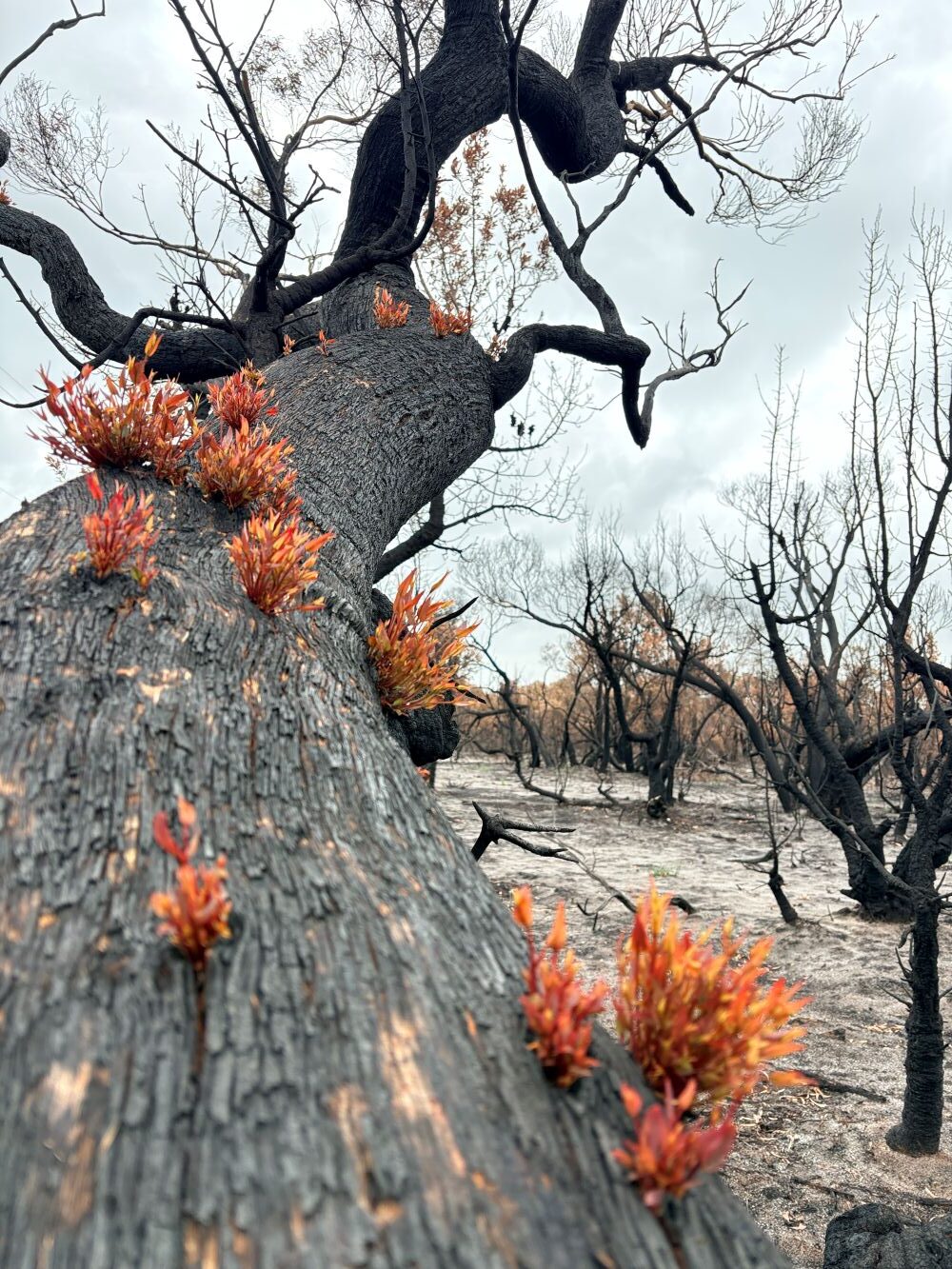
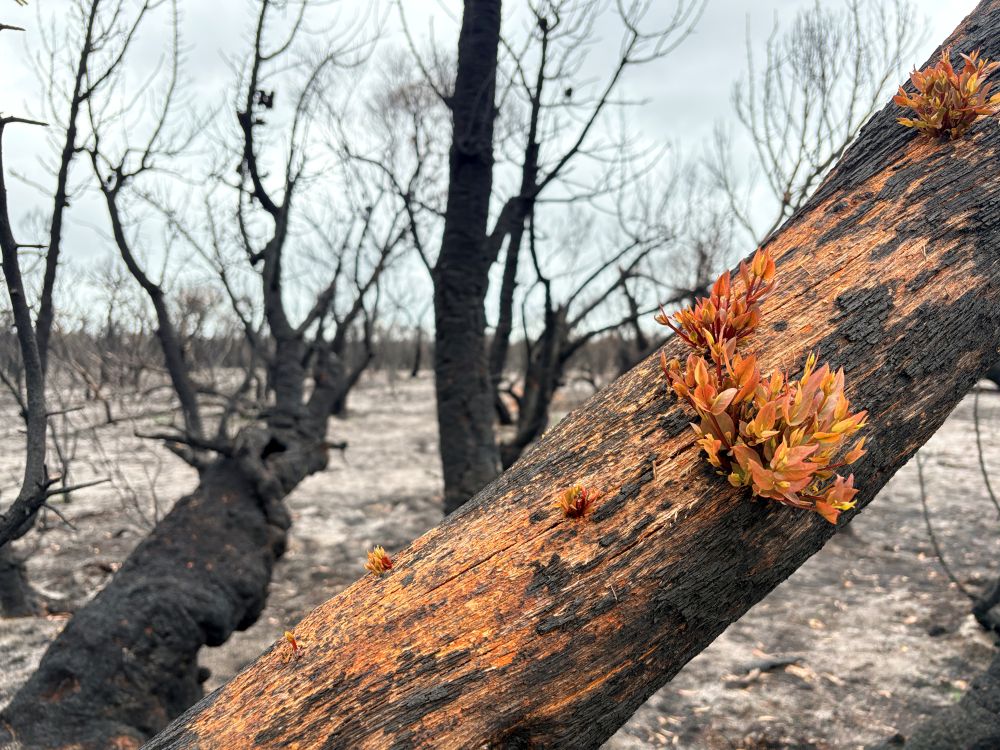
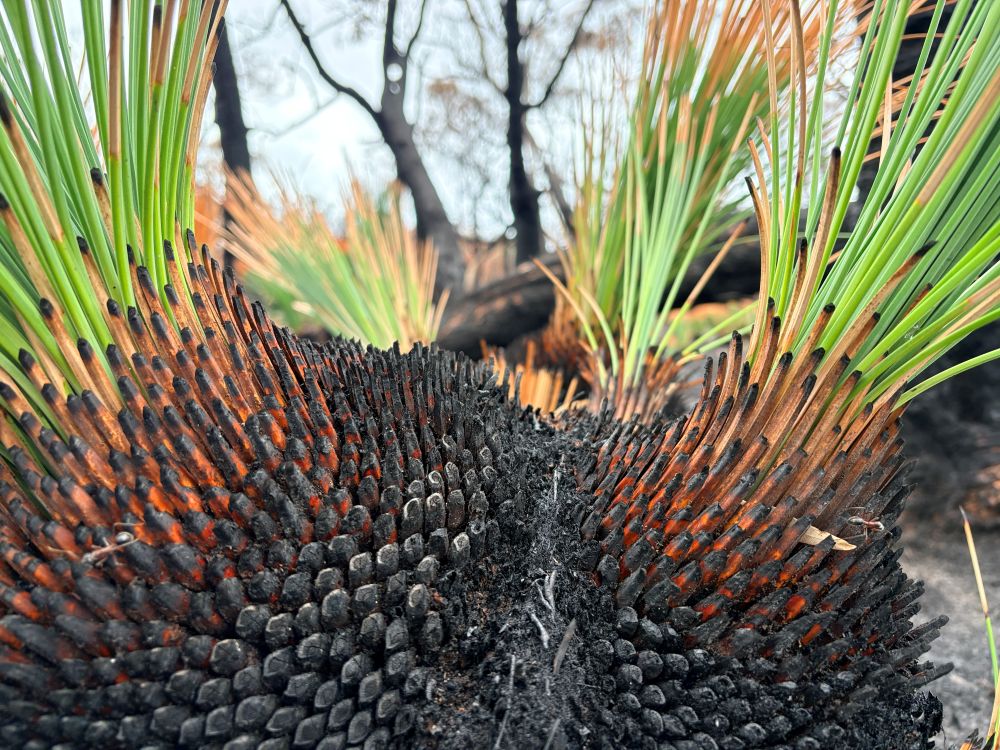
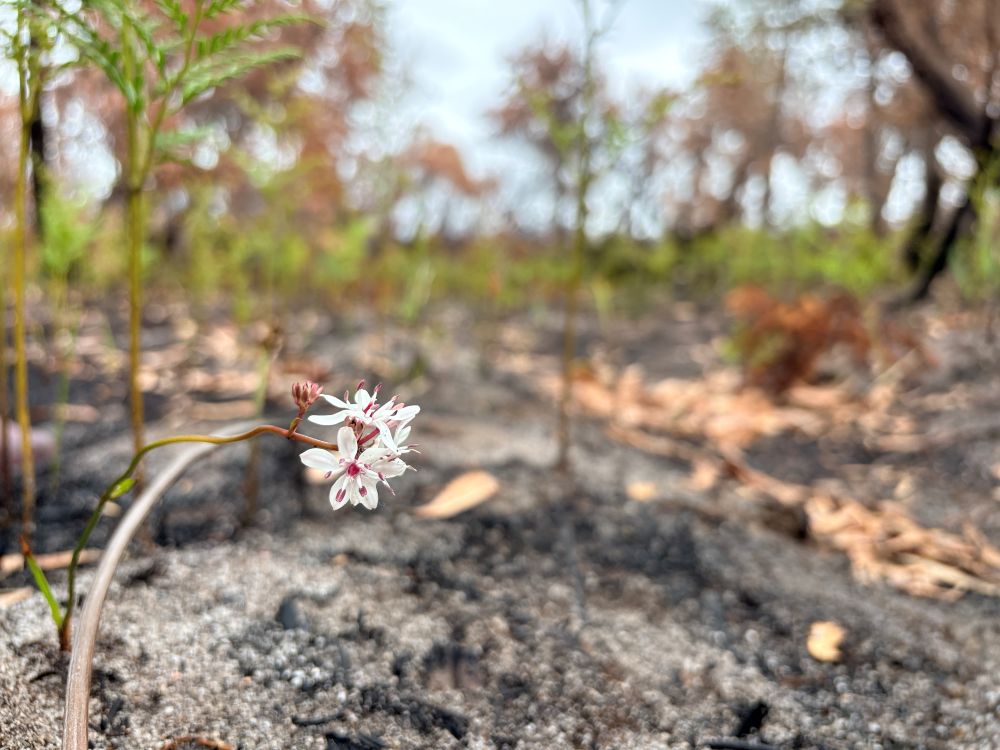
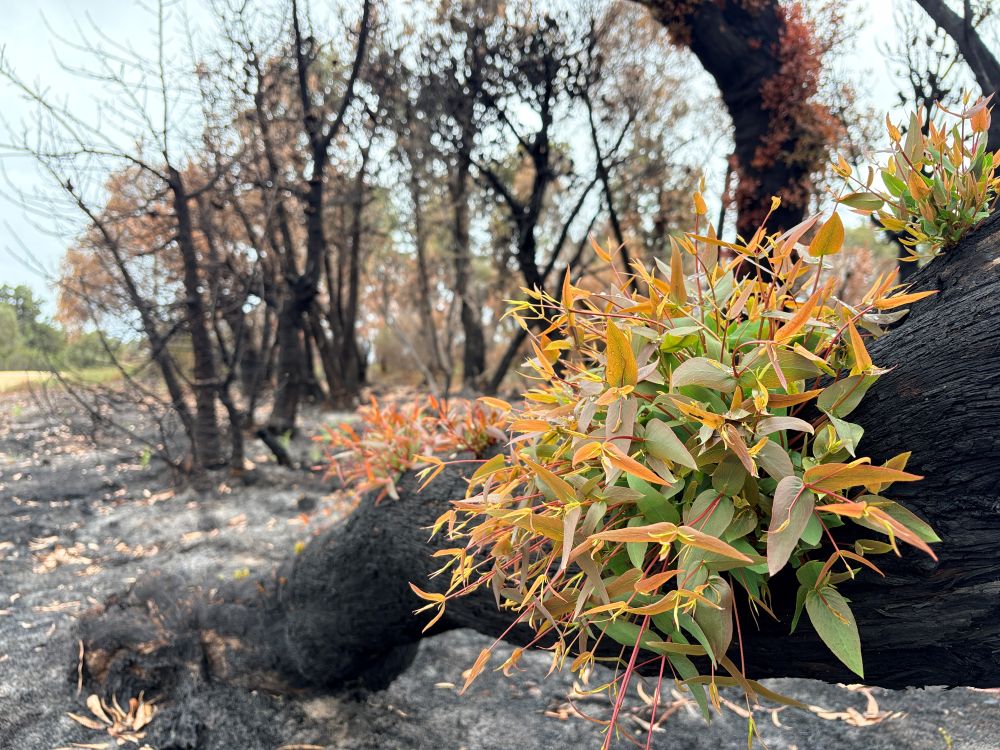
Although the landscape is burned and blackened, already shoots of colour and regrowth are emerging.
In September, fire went through Gippsland Lakes Coastal Park, which lies between Toonalook (Lake Victoria) and Walmunjeera (Lake Reeve), burning several hundred hectares of the reserve.
This is a place where tracks of Miowera (emu) and Jeera (kangaroo) are seen, crisscrossing signs of Kauan (echidna) digging, and tracks of Bowie (wallaby) and Naroot (wombat).
In the trees and in the sky, Kou-ark (kookaburra), Nganak (yellow-tailed cockatoo) and Naragol (crow) are heard.
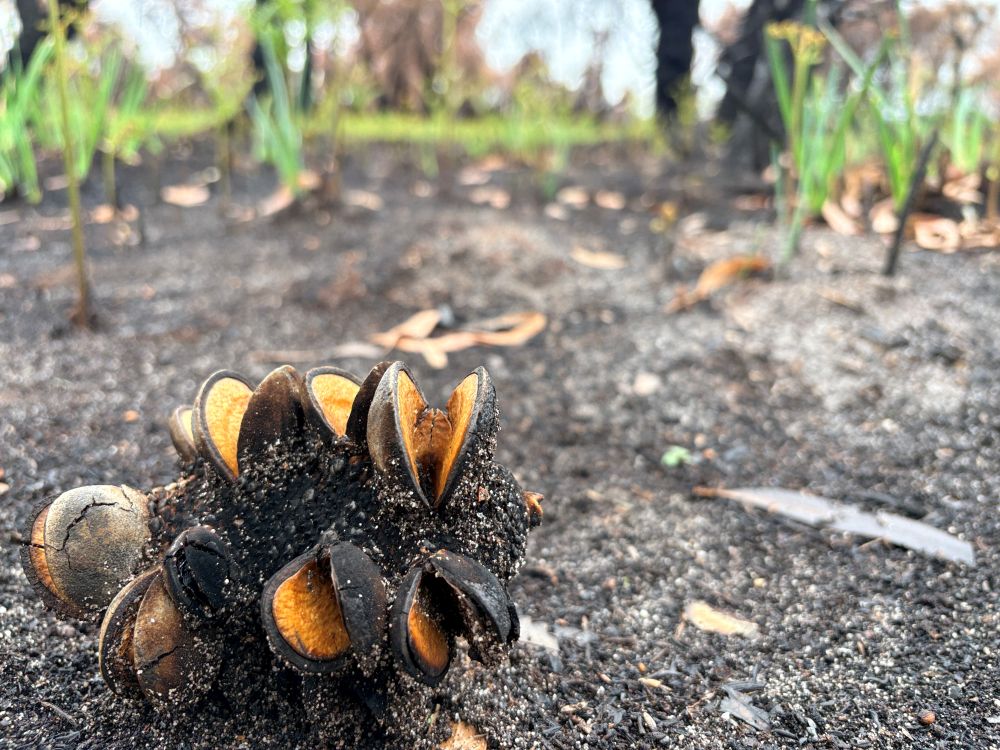
Walking through this special place today, you see charred remnants of sawtooth banksia, eucalyptus and gahnia, with occasional bursts of epicormic growth sprouting from the burned limbs.
Although it is clear this was not a planned burn, the fire has presented a unique opportunity to observe changes in the landscape, and to see things that perhaps were hidden before.
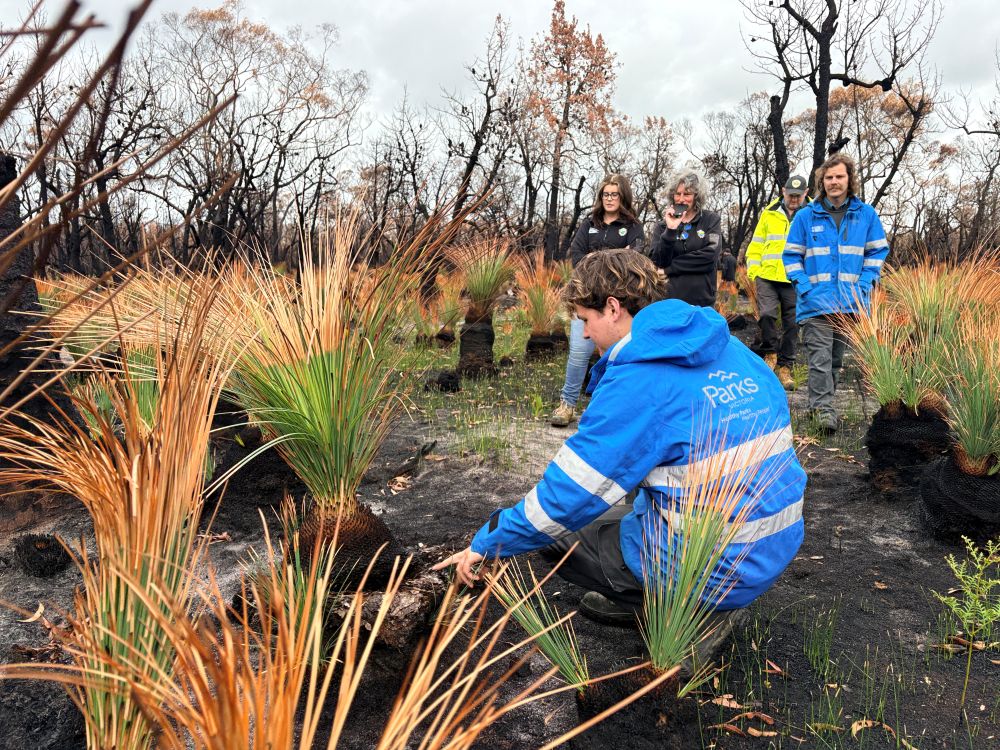
Shortly after the fire had been extinguished, our partners at DEECA initiated a post-fire cultural survey of the area, which was led by Uncle Russell Mullett, GLaWAC’s Senior Manager of Research, alongside our Senior Manager of On Country, Russell Dow, and Parks Victoria Rangers.
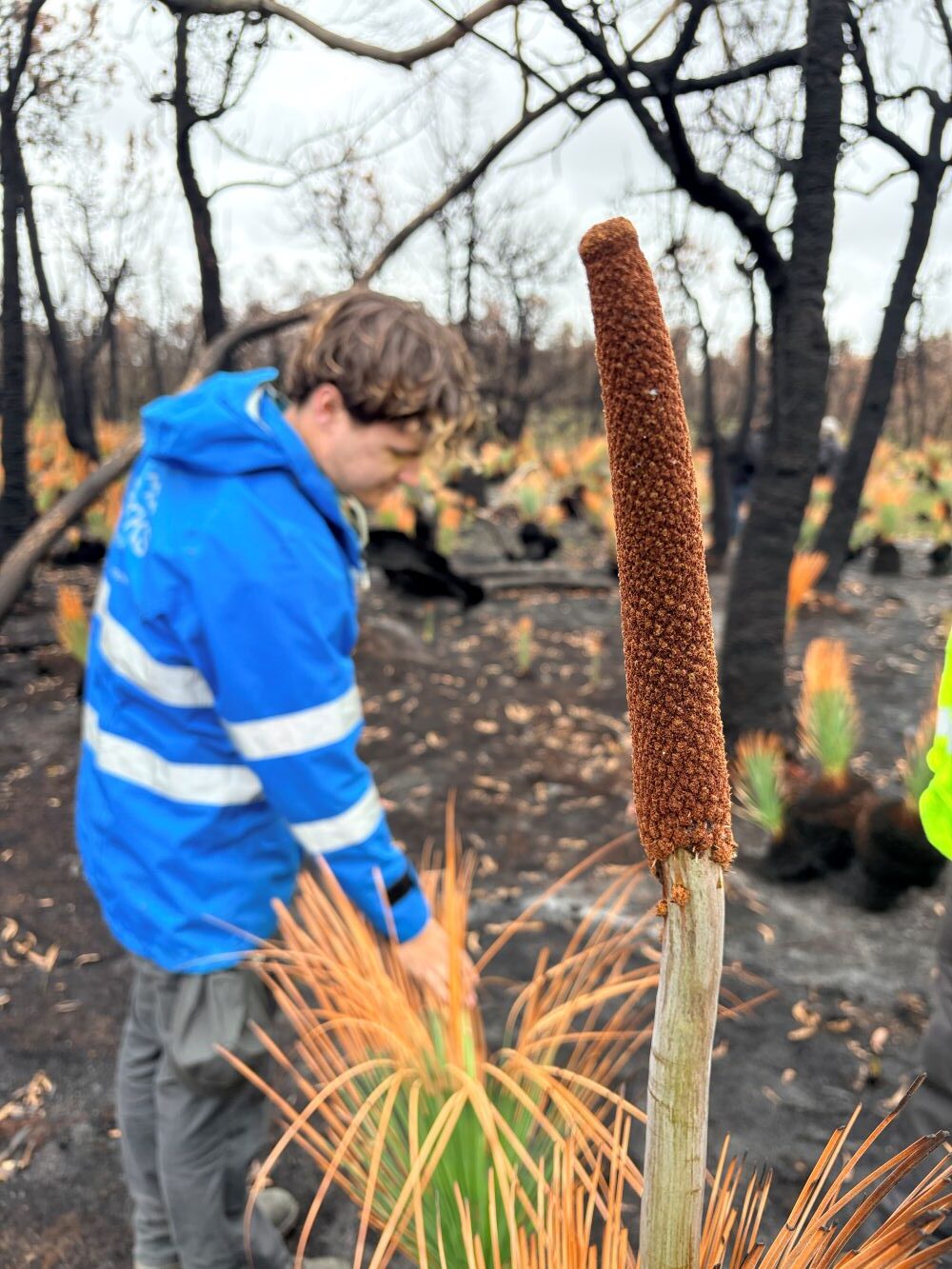
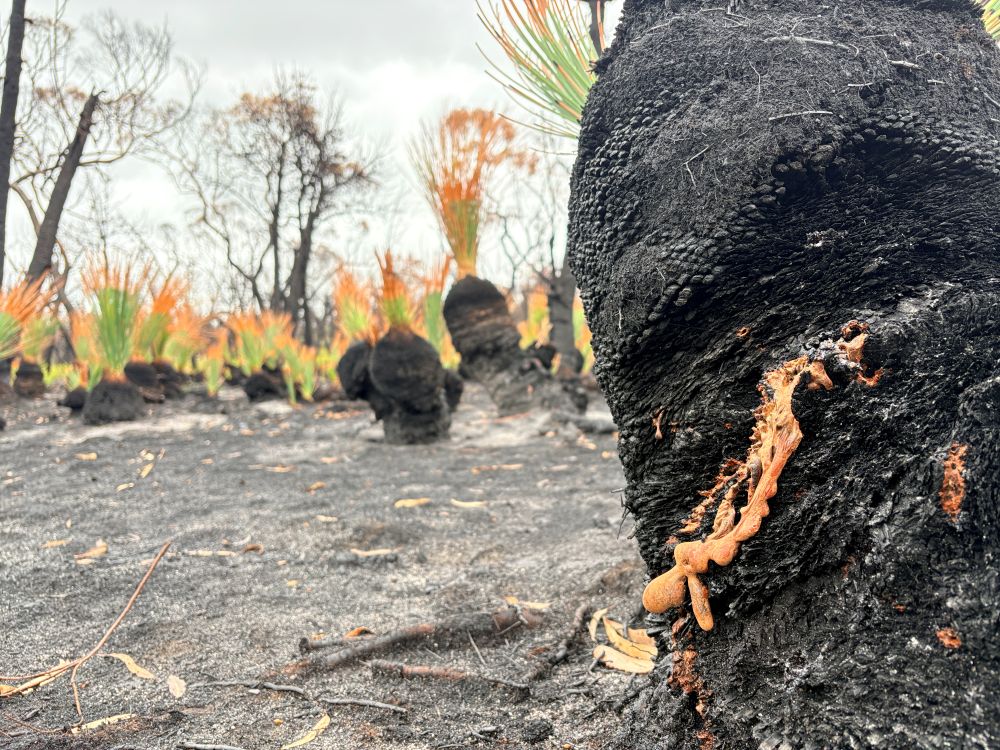
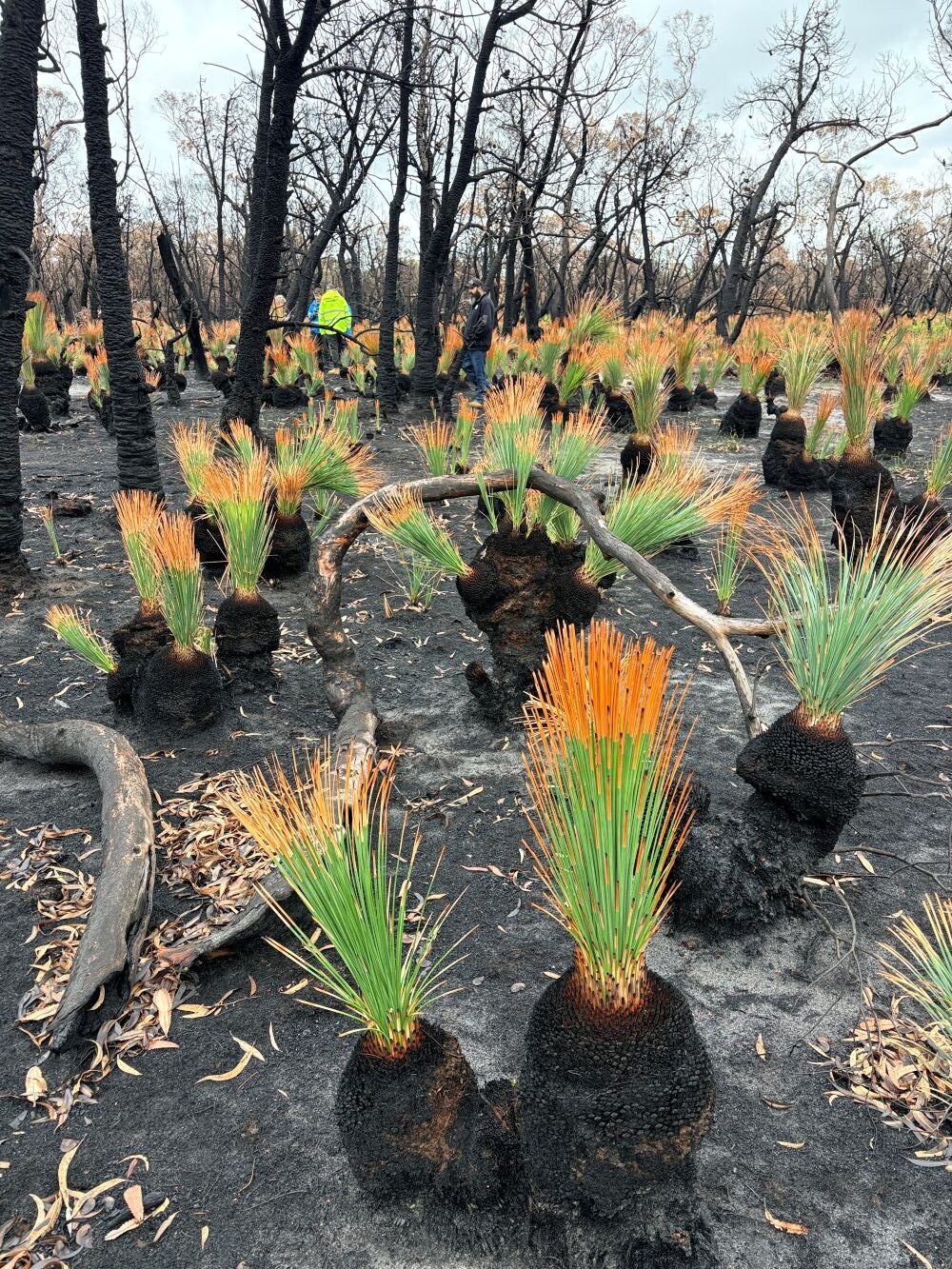
Among many interesting observations they made that day was a cluster of Grass Trees (Xanthorrhoea), which would have previously passed unnoticed, hidden amongst the thick vegetation.
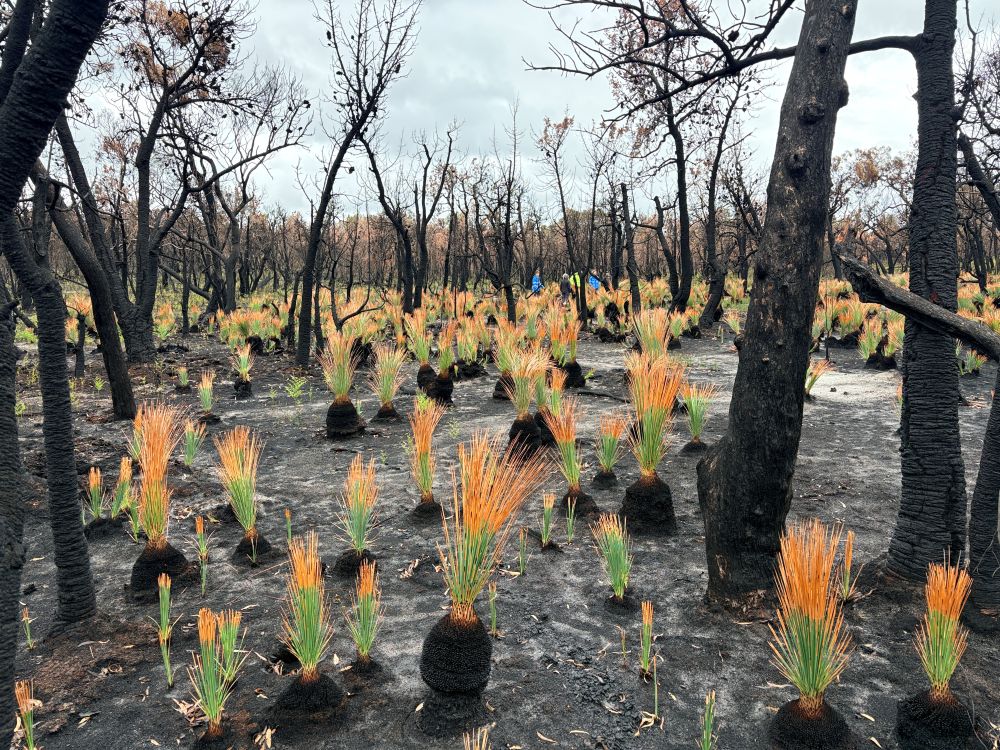
Grass Trees, which are actually a flowering plant, have cultural significance to Gunaikurnai, as an important part of daily life and tool-making, and in ceremony.
The gum the Grass Trees produce was used by our Ancestors for hafting wooden handles to stones axes.
The flower stems were used for fire sticks, a practice that continues today. The Grass Trees in turn rely on fire to regenerate.
This small copse of Grass Trees is another important piece of information for all to know as we continue to build connection to the cultural landscape of our Ancestral Homelands.
“It seems likely that where you have clusters of Grass Trees here like this, you would have had people gathering and camping,” he said. “They would have spent time here, making tools, repairing things.”
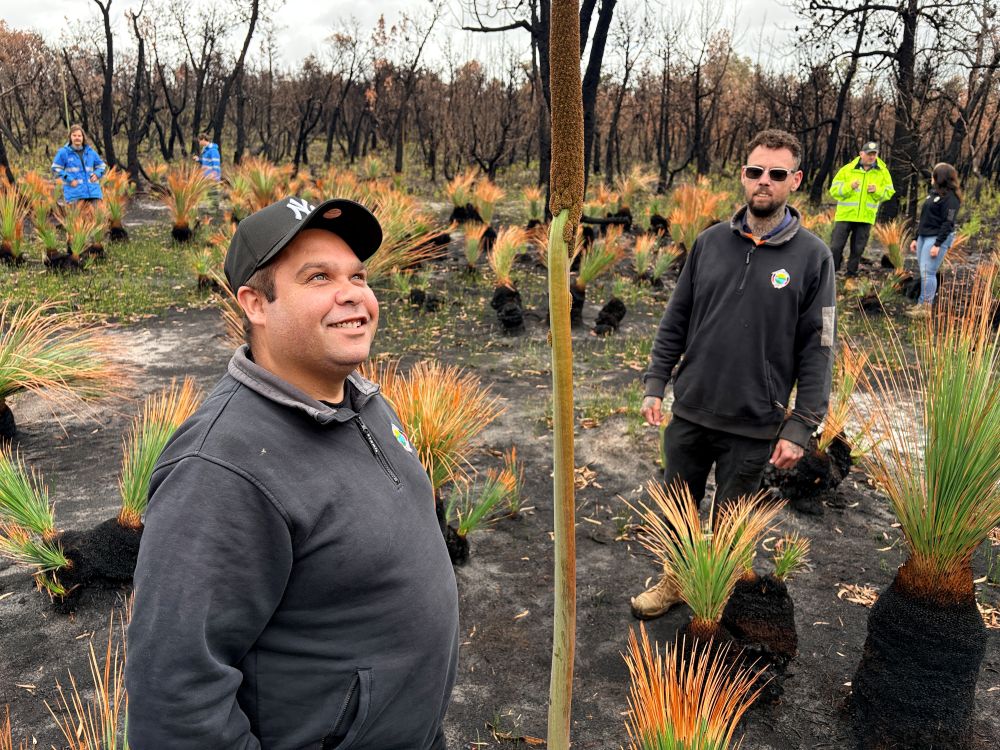
Post-fire cultural surveys like this one will be a more regular part of not just our cultural heritage research, but also our work to heal and protect Country.
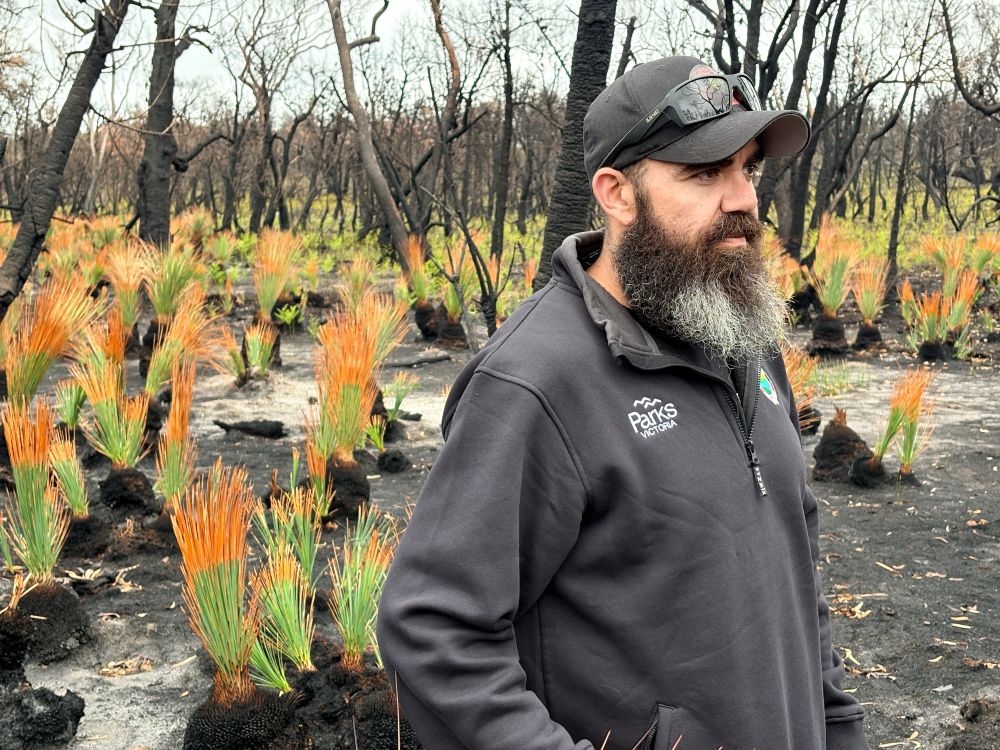
Russell Dow returned to the site a few weeks ago with Rangers Kobi Cook and Anthony Mobourne, and Cultural Heritage Technical Specialist Liz Foley.
Rangers will continue to return here on a regular basis over the coming months and years, to observe and record changes in the landscape.
With Uncle Russell they will continue to walk this Country, and note what they see.
They will sample the soil, take photographs, and examine cultural heritage, both tangible and intangible.
Russell Dow says the ability to watch and record how this important place responds to fire and then what occurs in the seasons ahead presents a unique and powerful opportunity for ecological and cultural learning.
“We’ll just let nature do its thing, but we can observe it and learn from what we see.”