
Annual General Meeting
Friday, November 27, 2026
GLaWAC Annual General Meeting
Friday, November 27, 2026
9am – 2:30pm
GLaWAC’s Kalimna Office – 27 Scriveners Rd, Kalimna West
Documents relating to the AGM have been mailed to all members, and are also available to read and download here.
Registration
Registration for the AGM will close at 5pm on Thursday, 26 November to ensure membership can be confirmed prior to the meeting.
To register for either in-person or online attendance, complete the form below.
For members unable to attend the AGM in person, an online meeting option will be available.
Register for the Annual General Meeting – GLaWAC Members Only
If you have any questions or experience issues with registration, please contact our admin team for assistance.
Call – 03 5152 5100
Email – admin@glawac.com.au
Annual Report
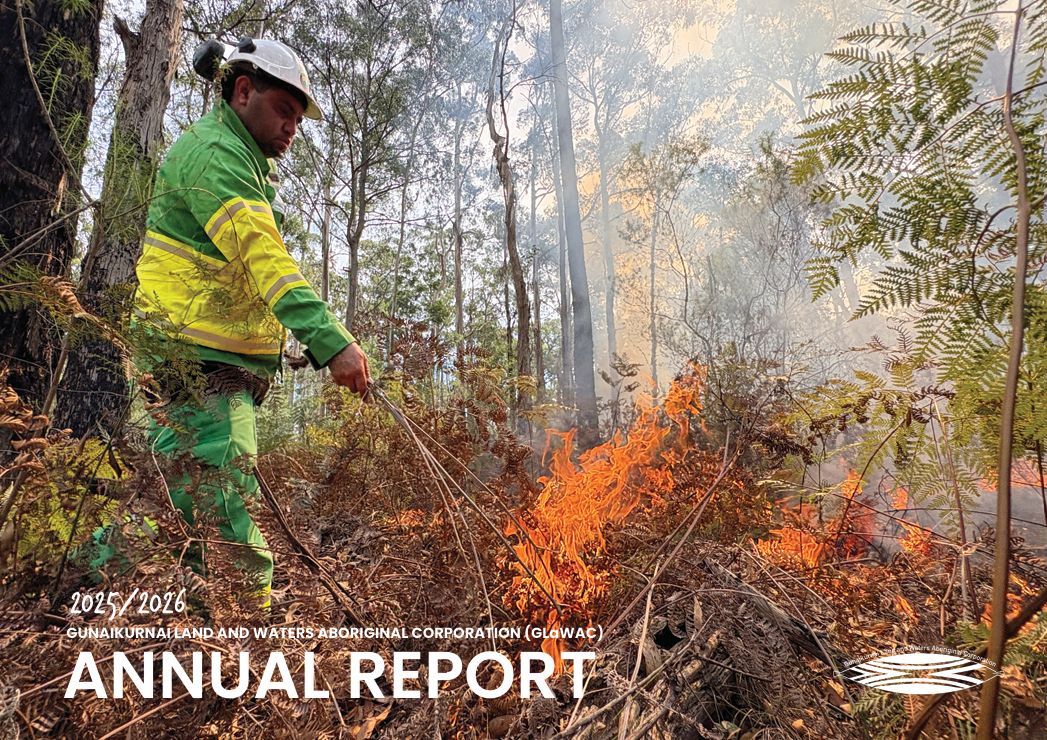
The two sections of our Annual Report – Our Work, Our People + the Audited Financials – are both available here as a digital download.
You can also request a printed copy of these documents be mailed to you by emailing comms@glawac.com.au or call 03 5152 5100.
Printed copies will also be made available at the AGM.
Annual Report – Our Work, Our People
Annual Report – Audited Financials
Got Questions About the AGM? Here’s Some Answers.
Item 13 of the AGM Agenda, as set out in the meeting notice, is a motion for members to approve the payment (remuneration) of Directors.
Members have told GLaWAC, including at the 2025 AGM, that they want better oversight (transparency) of GLaWAC’s corporate operations and finances.
Being a Director comes with a lot of responsibilities including the overall success and legal compliance of the corporation.
To make sure Directors are acting in the best interests of GLaWAC and doing their job as effectively as they can, all Directors must meet legal duties set out in the Corporations (Aboriginal and Torres Strait Islander) Act 2006.
The main responsibility of a Director is to contribute actively as a member of the board to oversee the governance, performance and compliance of the corporation.
Directors need to:
- know what the corporation is doing
- learn how a proposed action will affect the corporation’s business performance – especially if it involves a large amount of the corporation’s money
- get professional advice when it’s needed to help the director make an informed decision
- ask questions of managers and staff through the chair at directors’ meetings about how the corporation is going
- take an active part in directors’ meetings.
In recognition of this serious task, GLaWAC’s directors are paid in accordance with Rule 6.14 of the Rulebook.
From this year’s AGM and into the future, members will be asked to review and approve the amount people elected as Directors are paid.
But that’s not all we have planned. Keep reading to find out why it’s time to review the Rulebook. We’ll want to hear from you about this too!
The Rule Book of Gunaikurnai Land and Waters Aboriginal Corporation (Rule book) used today was first developed in 2017 (after the period of Special Administration).
The 2017 Rule book has been amended three times, most recently in 2023 to ensure it complied with changes to the Corporations (Aboriginal and Torres Strait Islander) Act 2006.
GLaWAC has grown a lot since 2017, and is projected to keep growing.
At the same time, Gunaikurnai Native Title Holders —whether they are members of the corporation or not—have told us that they want more accountability, oversight and input into how GLaWAC operates.
So in 2027 GLaWAC plans to start a comprehensive review of the Rule book, including setting up times to get feedback and input from members on what a new Rule book should include or change.
A review like this will take time, and we need your help as members to do that.
But there are some small changes we are asking members to approve at the 2026 AGM to ensure the Rule book keeps working well while the review takes place.
Explanatory Statement for Special Resolution 1 – updating the definition of ‘Gunaikurnai People’.
The definition of ‘Gunaikurnai People’ in the Rule book still refers to a time, before October 2010, when Gunai, Kurnai or Gunaikurnai people had not yet been determined as native title holders by the Federal Court.
The special resolution members will be asked to consider and vote on, as set out in the meeting notice, is to update that definition.
The update will adopt the same definition used by the Federal Court of Australia in the Gunai/Kurnai native title determination of October 2010.
This is an important administrative change to demonstrate that GLaWAC always operates in the best interests of all native title holders.
Updating the definition will not change how the Rule book operates – but it will make sure all the work of Elders who fought long and hard for native title is properly reflected in the Rule book.
Explanatory Statement for Special Resolution 2 – updating Rule 5.3
This proposed amendment is a small change to fix an error in the Rulebook.
Rule 5.3 says how often the Elders Council must meet, including when required by ‘Rule 8’.
The reference to Rule 8 is incorrect. Rule 8 is about native title decision making and does not require Elders Council meetings.
The correct reference is ‘Rule 6.23’, which requires Directors to meet with the Elders Council at least twice per year.
We think this error was the result of Rule book amendments in the past when some clause numbering was changed.
If members vote in favour of this change, it will clarify that the Elders Council needs to meet:
- At the AGM (in accordance with rule 5.2 and 5.3)
- At least once per year (in accordance with rule 5.3)
- Twice per year with Directors (in accordance with the updated rule 6.23)
In practice, the Elders Council meet at least four times a year (once a quarter) to meet these Rule book requirements