
Where the wild eels go
1 September 2026
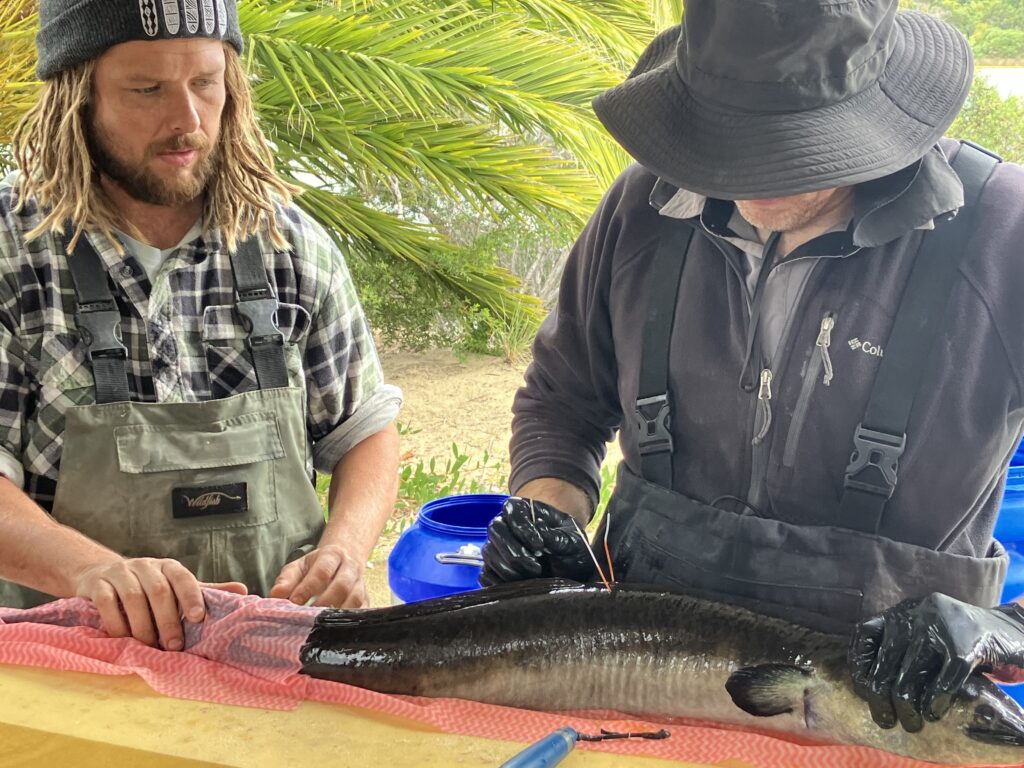
Eels are slippery, elusive creatures – but we’re beginning to find out where they go when they leave Country.
For the past few years, we have been monitoring this culturally significant species in two ways: radio tracking short-finned eels with the help of community in the Franklin River, and satellite tracking long-finned eels as they begin their spawning migration.
The satellite work is being done in partnership with the Arthur Rylah Institute (ARI) – with GLaWAC’s Rangers working alongside researchers.
It all started in Autumn 2024, when 20 adult eels were captured from local waterways, fitted with satellite tags and released. These tags tracked their movements for five months as the eels made their way far out to sea to spawn. While we know they leave freshwater to travel north, much about that epic trek remains a mystery. There are many unanswered questions.
But now … we are starting to unravel the mystery.
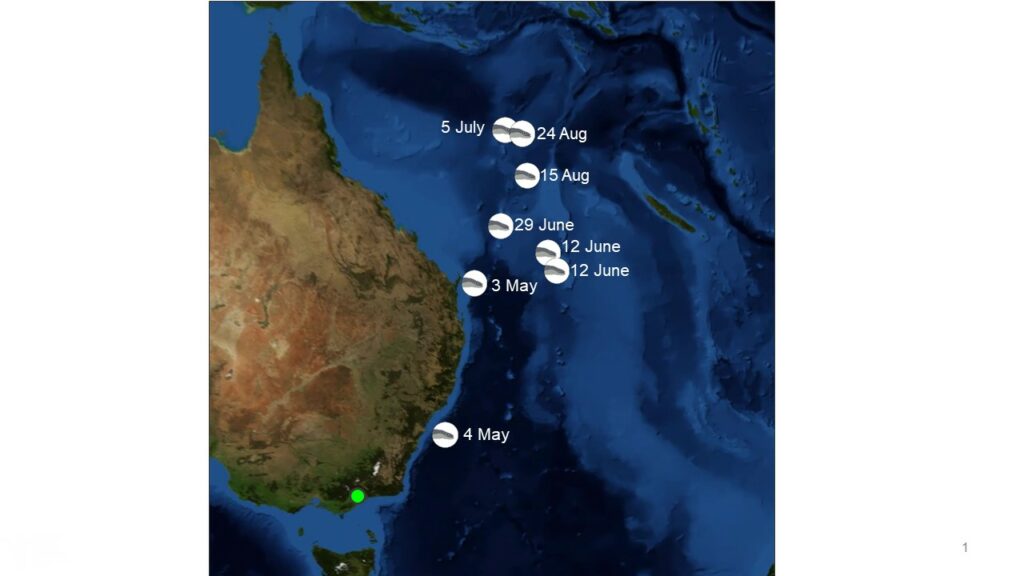
The tagged eels travelled between 2,100 and 3,400 kilometres, with some venturing hundreds of kilometres offshore and reaching as far as the Coral Sea. The map really highlights the scale of their grand adventure!
We also discovered fascinating detail about their behaviour. Eels follow a daily pattern, swimming in shallower water at night and diving deeper during the day. One eel was recorded diving to 952 metres!
The data also reveals if an eel was eaten by a predator – and in some cases, what kind of predator – helping us better understand the challenges they face during migration.
Findings from this work forms part of a groundbreaking study led by Wayne Koster from ARI. Published in Frontiers in Marine Science, it is well worth a read – the way the tags work, and what can be learned from the data, is genuinely fascinating. You can read the study via the button below.
This work continues – with more satellite monitoring planned to help build our understanding over time.
Because, while eels may be difficult to find, we’re slowly piecing together the story of where they go – and just how far they travel beyond Country.