GLaWAC Towera Crews on the Front Lines of Bushfire Response
3 March 2026
In the aftermath of the 2019/20 bushfires, Traditional Owner Groups across Victoria, including GLaWAC, urged the government to learn from our people’s understanding of Fire and Country, knowledge gained from thousands of years of observation and practice.
One of the things we recommended was that mob be more directly involved on the front lines of fighting bushfires, as well as in fire and land management outside of bushfire season.
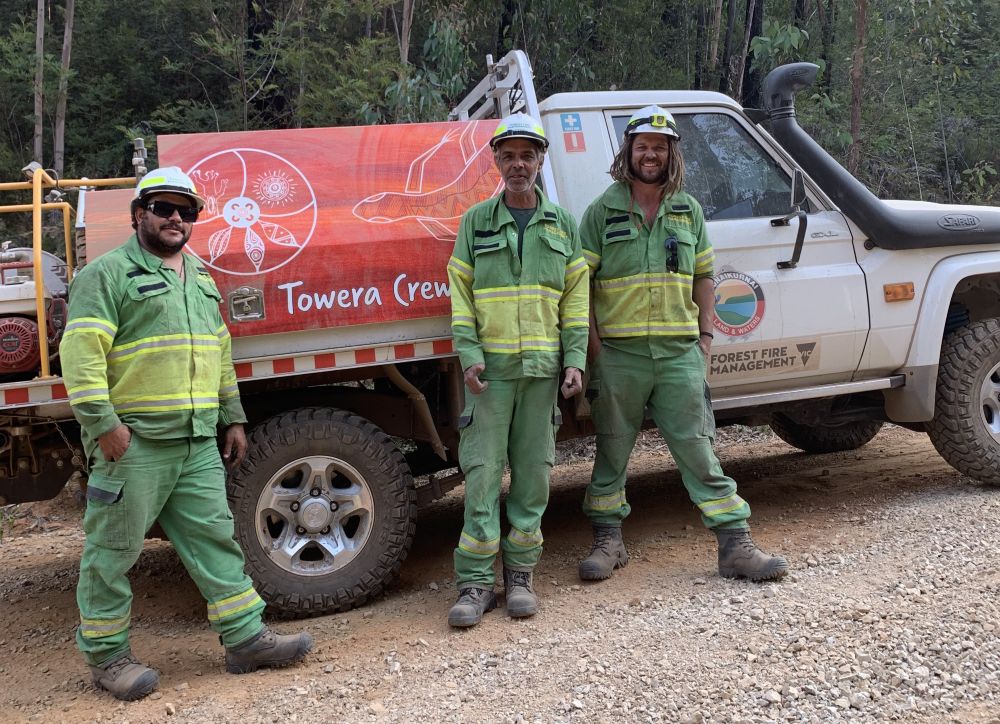
Fast forward a few years, and in 2024 GLaWAC became one of the first Traditional Owner Corporations in Victoria to officially join the collaborative fire response force that is Forest Fire Management Victoria (FFMV), alongside staff from DEECA, Parks Victoria and Melbourne Water.
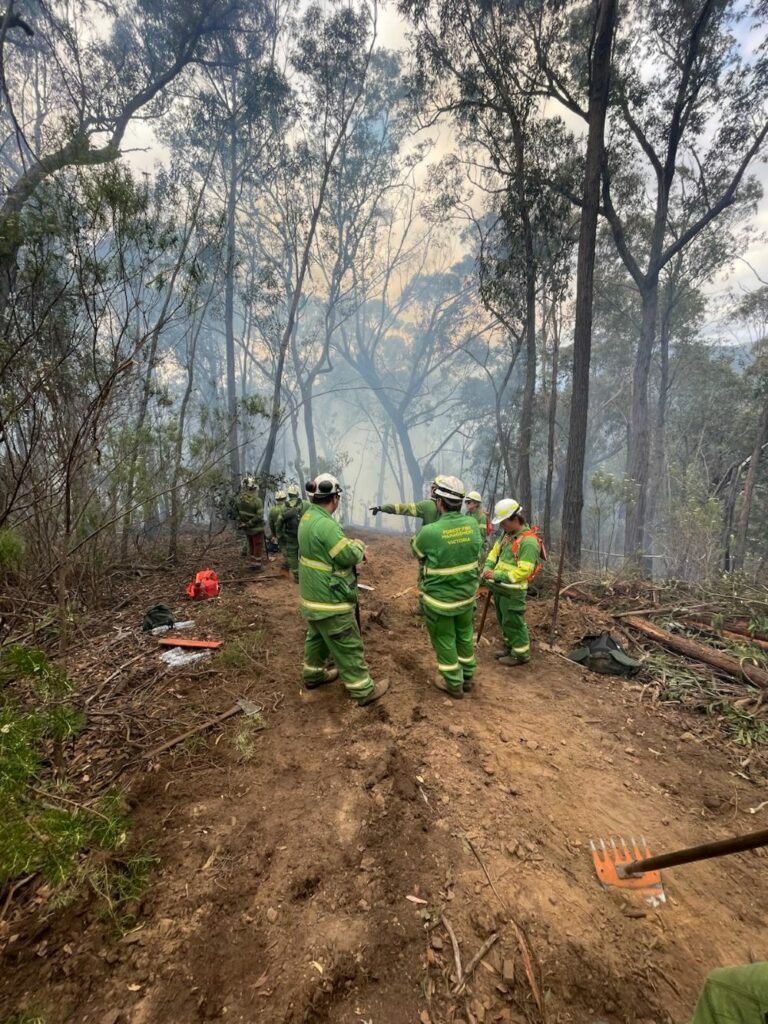
What this means is that when a bushfire breaks out on Country, Aboriginal men and women from GLaWAC, equipped and trained in firefighting, are there where the fire burns, working to bring it under control.
GLaWAC has 11 staff that are trained in fire response.
This is more than double the number of fire-trained staff we had last year, thanks to GLaWAC’s investment in training and recruiting to expand our Cultural Fire and fire response capabilities.
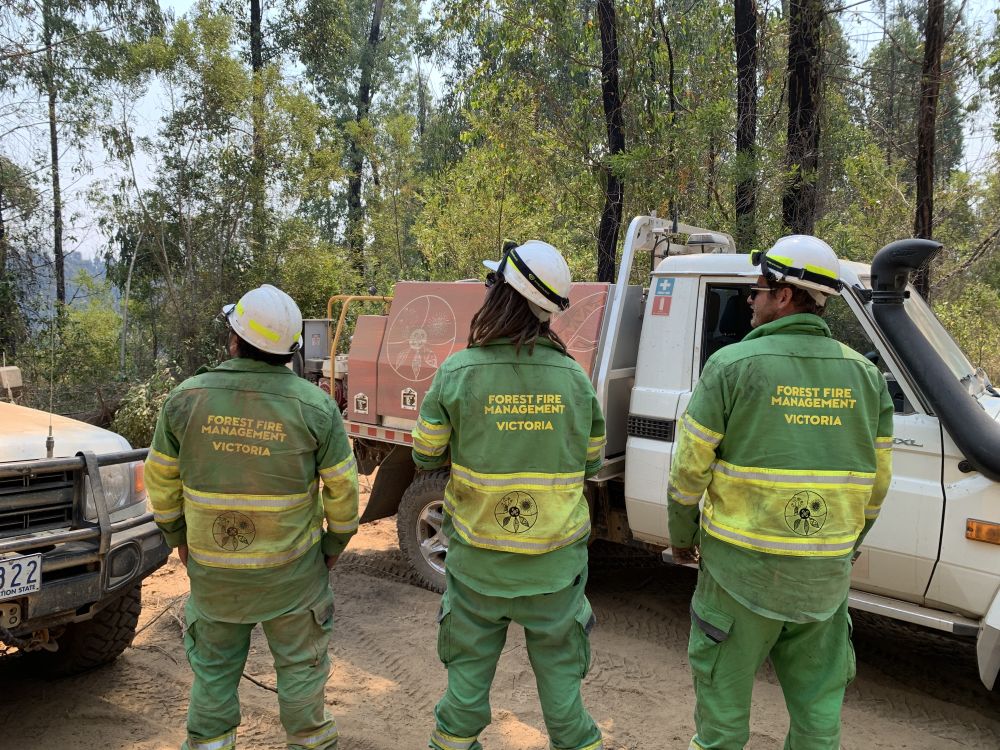
It’s fair to say they’ve been doing the hard yards this summer.
When catastrophic fire conditions kicked in that second week of January, Trey Parsons, Troy Wilson, Bryce Baxter, Rob Baxter and crew leader Cameron Fleet deployed to the Orbost area, to support the neighbouring Snowy district to contain dozens of new fires started by lightning strikes.
Working 12+ hour days in difficult conditions, the GLaWAC firefighters worked alongside Parks Victoria and DEECA staff, using our new dedicated firefighting units to supress and contain the new fires.
Tyler Hood and Callum Morton were deployed to the Walwa fire which was burning out of control near Corryong.
Tyler and Callum did four night shifts from evening to early morning providing offsider support to the bulldozer operators.
On one of those nights alone Tyler covered almost 400km in low range 4WD, following the bulldozer lines.
Kevin Hood, Mick Farnham, John Baxter and Deon Baxter were deployed to the Dargo area, where a number of fires had been started by lightning strikes.
As part of the FFMV force, the GLaWAC crew did the physically punishing work of creating access tracks and consolidating containment lines, to prevent the fire from spreading toward people and property.
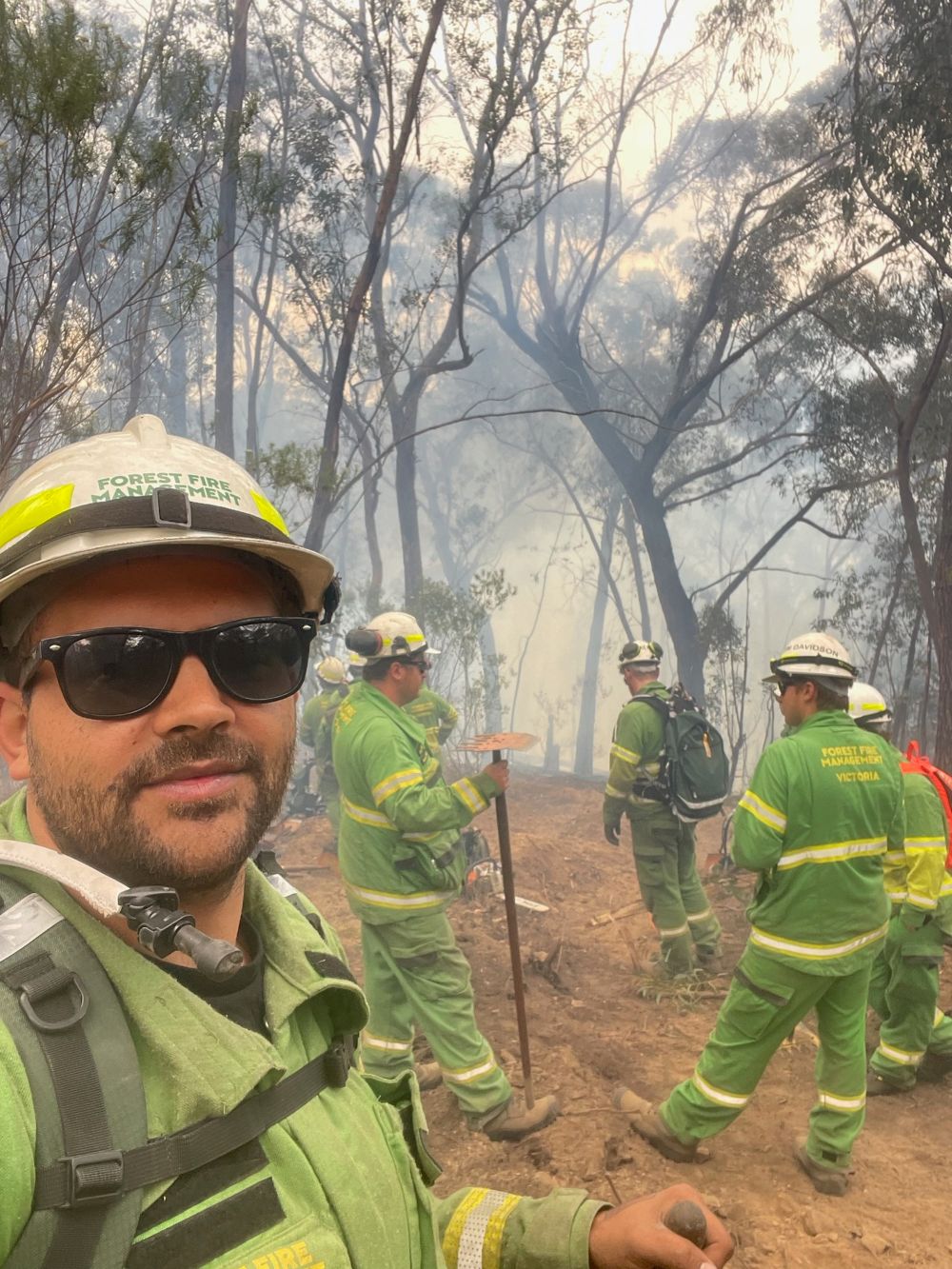
Kevin Hood said the work was physically difficult but also very rewarding – meeting people, learning new things, being a part of something big.
“We were working up and down a very steep slope, using rakehoes to make access trails,” he said. “We’re talking 45 degrees or so – 1 metre up for every 1 metre along. It was hard, tough country. After a few days I had a lot of blisters, not much skin left on my soles.”
Every now and then, air support helicopters would fly overhead, dropping massive scoops of water on the nearby blaze.
Kevin said he felt a lot of appreciation and support from the local people, who understood how hard the fire crews were working to protect them and their property.
“I remember meeting this one woman, she was evacuating from her property outside Dargo,” Kevin said. “You could see the fear in her eyes, she was genuinely scared. And she thanked us. That made me realise the importance of the work we’re doing, what it means to these communities.”
Jake Atkinson, one of GLaWAC’s Natural Resource Management Rangers out of our Morwell office, spent seven days keeping the Dargo fires contained later in January.
Having previously worked at DEECA Jake has had a good deal of fire experience, but he still really enjoys being involved on the ground.
“I like getting out on Country, and seeing how things change after fire,” he said. “The vegetation changes, Country changes. You can see which trees and plants thrive after fire, and which don’t. I like observing how Country responds. I feel like I’m always learning.”
Jake said he hopes that having more Aboriginal firefighters on the ground, working alongside the other agencies, will help make sure protecting cultural heritage is not forgotten or dismissed during times of fire emergencies.
“We know where the sites of cultural significance are, and there are buffer zones around those places,” Jake said. “Those must always be respected. Protecting cultural heritage is really important to me. It’s our heritage, and once it’s destroyed you can’t replace it.”
A number of GLaWAC staff remained on fire deployment or standby through February.
We thank them for their dedication to protecting Country.