On Country Rangers Play Vital Role in Protecting Endangered Pygmy Possum
19 January 2026
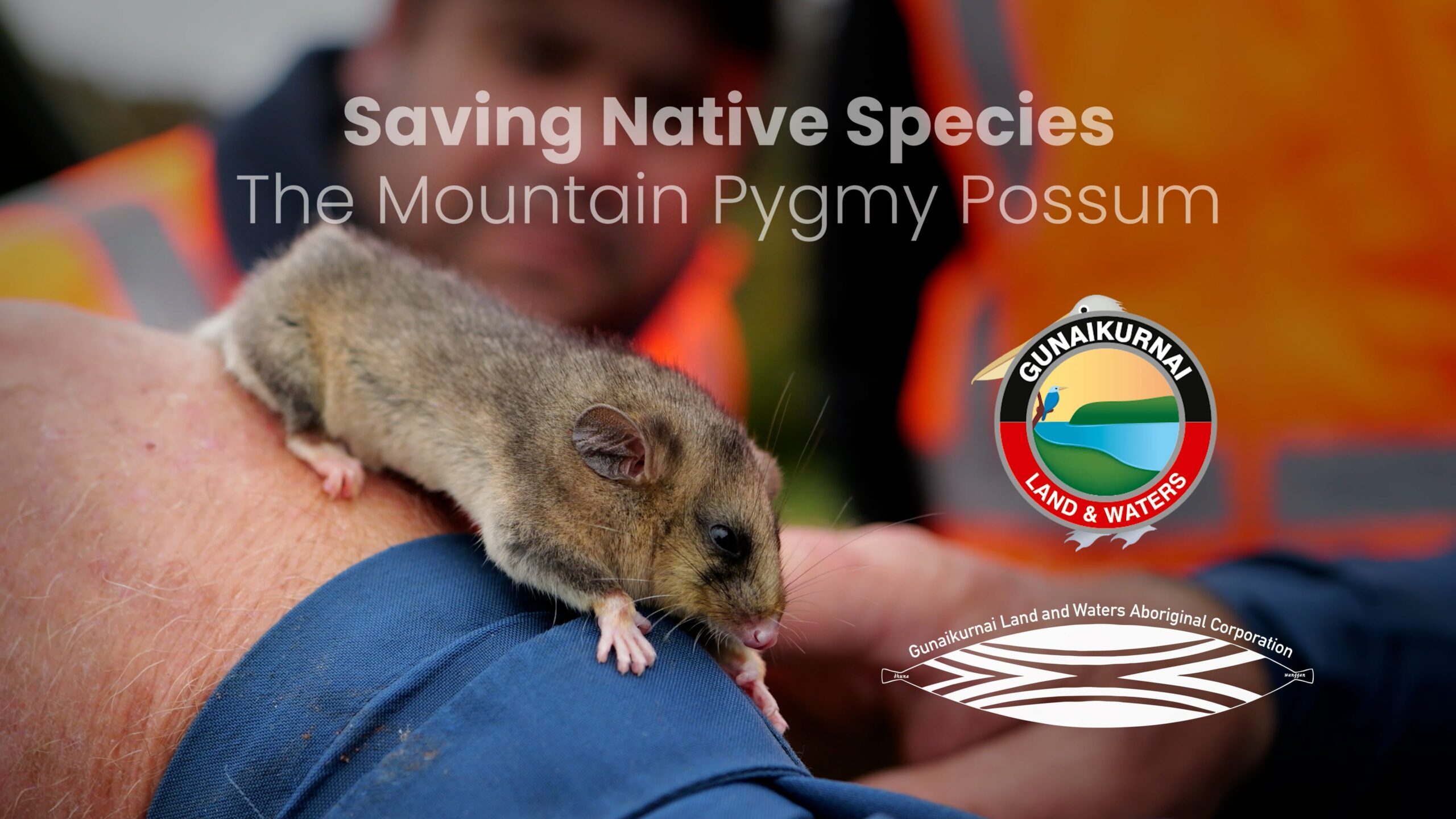
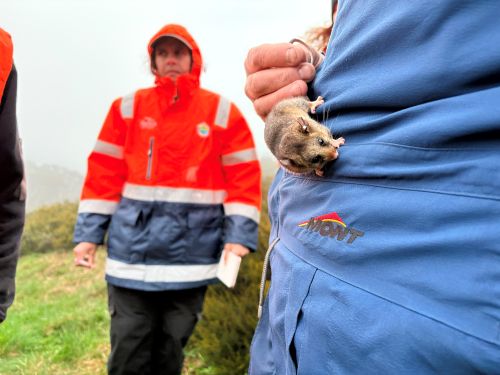
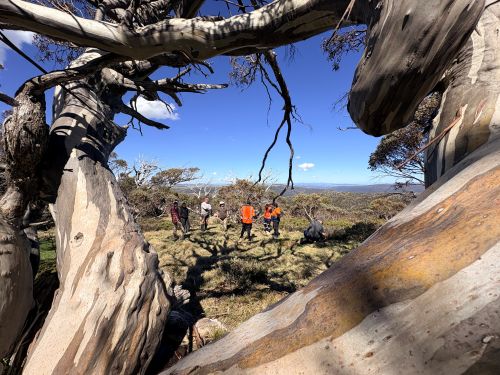
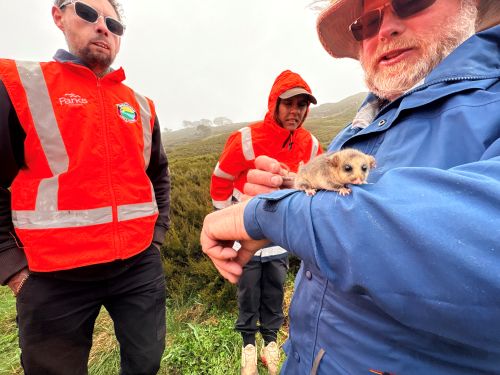
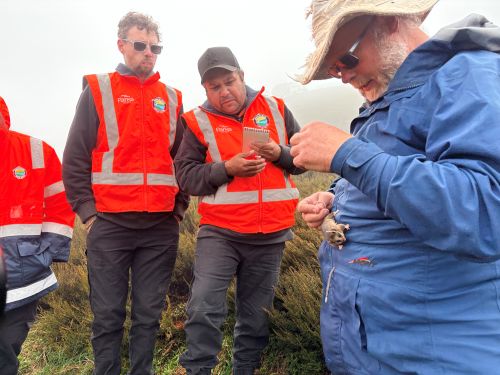
A team of GLaWAC On Country Rangers were working in the Alpine high country last month, continuing a project to help the critically endangered mountain pygmy-possum.
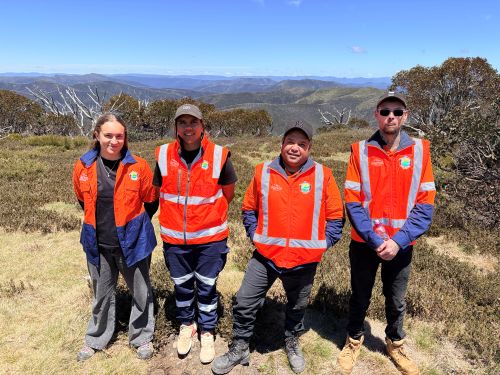
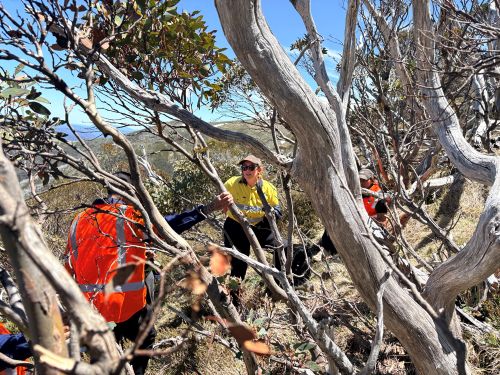
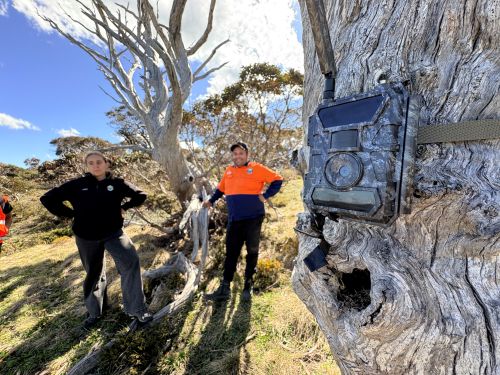
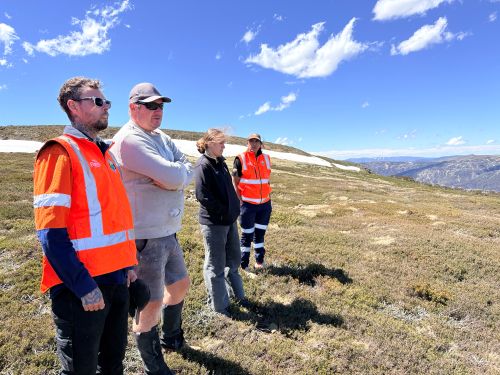
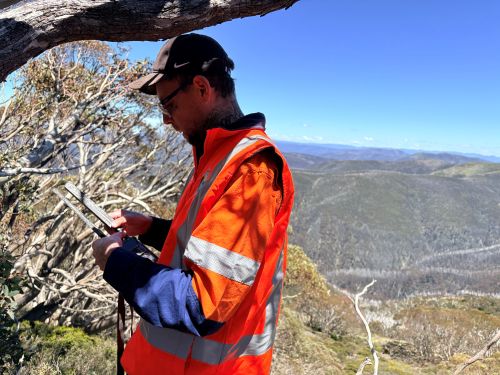
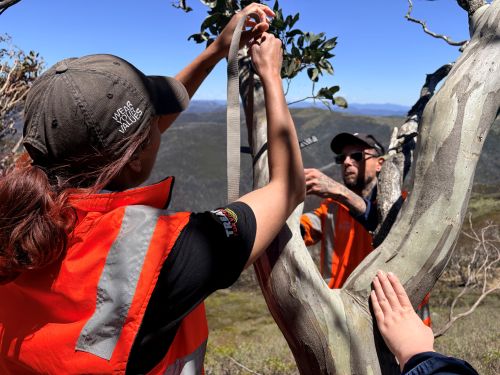
On Country Rangers Kobi, Shakiah, Anthony and Logan, and Project Officer Olivia set up motion sensor cameras on Gunaikurnai Country at Mount Higginbotham and Mount Loch, to monitor the number of Bogong moths active in the area.
As Aboriginal people have understood for tens of thousands of years, being aware of what is happening on Country is about being able to see that everything is connected.
When one piece of the puzzle of our ecosystem is impacted, the effects ripple out.
“Bogong moths are the pygmy-possum’s most important source of food,” Kobi said. “And so the number of Bogong moths that make it to the mountains each spring and summer has a huge impact on the health of the pygmy-possum population.”
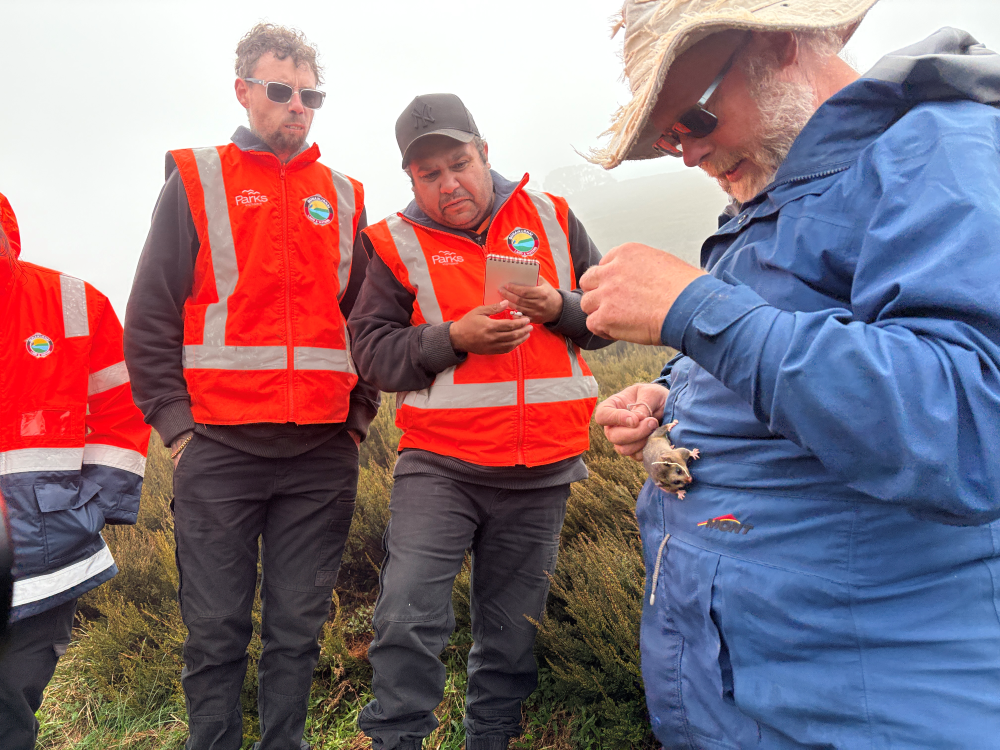
Although the pygmy-possums also eat other insects, as well as seeds, dupes and berries, the high protein of the Bogong moth is hard for them to replace.
The connection between the pygmy-possum and the Bogong moth was made very evident in 2017 when, for reasons that are still being understood, only about 0.5% of the typical Bogong moth migration numbers made it to the high country.
In response, more than half of female mountain pygmy-possums in monitored populations lost their entire litters, and in the worst site about 95% of females lost all their young.
Of the pygmy-possums that survived, many were undernourished.
When the Bogong moths returned in more typical numbers the following year, the pygmy-possum population rebounded.
Supported by the Federal Government’s Saving Native Species Program and the North East Catchment Management Authority, this project involves GLaWAC working in concert with many partners, including Alpine Resorts Victoria (which manages Mt Hotham and the other resorts in Alpine National Park), wildlife biologist Dean Heinz, Ecological Geneticist Dr. Andrew Weeks, and Parks Victoria.
In addition to Bogong moth numbers, other aspects of the project include managing the native bush rat population, which competes with pygmy-possums for food and habitat, and creating habitat links to restore the pygmy-possums’ natural migration and mating patterns.
Once thought to be extinct, the mountain pygmy-possum was “rediscovered” at Mt Hotham in 1966.
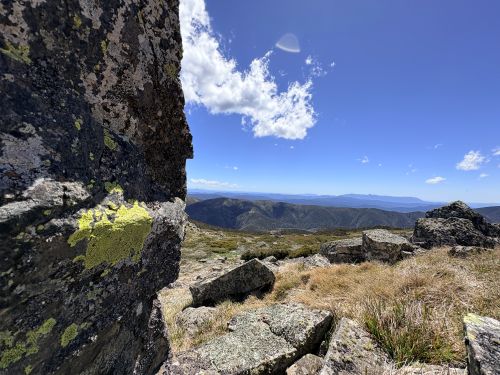
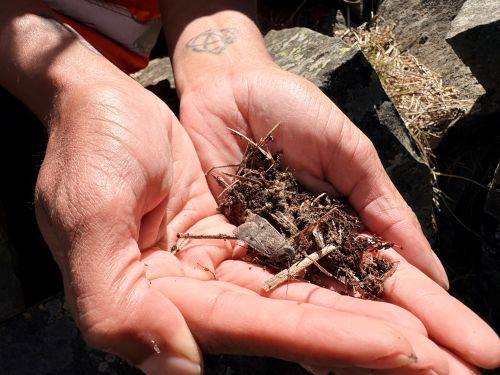
The boulder fields of ancient igneous lava around Mt Hotham are the pygmy-possum’s preferred habit, largely because it is also here that the Bogong moth makes camp after its long migration from the north.
This is the second year that GLaWAC rangers have installed the motion capture cameras to monitor the moth numbers.
Powered by small solar panels, they are strapped to snow gum boughs in the spring, and brought back in again before the first snow falls of the following year.
During that time this clever piece of technology automatically emails to GLaWAC the photos it takes of Bogong moths rising from the boulder fields at sunset.
“By analysing these images we are able to estimate the size of the Bogong moth migration,” Shakiah said. “That then gives us a good idea of how much protein our pygmy-possums are going to get over the summer, which is really important as to whether these little guys will be able to survive and thrive.”
Olivia said that although the causes of the disrupted moth migration in 2017 were not fully known, threats to key insect species include land‐clearing, insecticide use, light pollution and climate change.
“As we are seeing here in the high country, what impacts the moth population is not just about the moths,” she said. “It’s about the entire alpine food web, and that includes our mountain pygmy-possum.”
If you’d like to play a role in tracking the Bogong moth, check out Zoos Victoria’s Moth Tracker app!